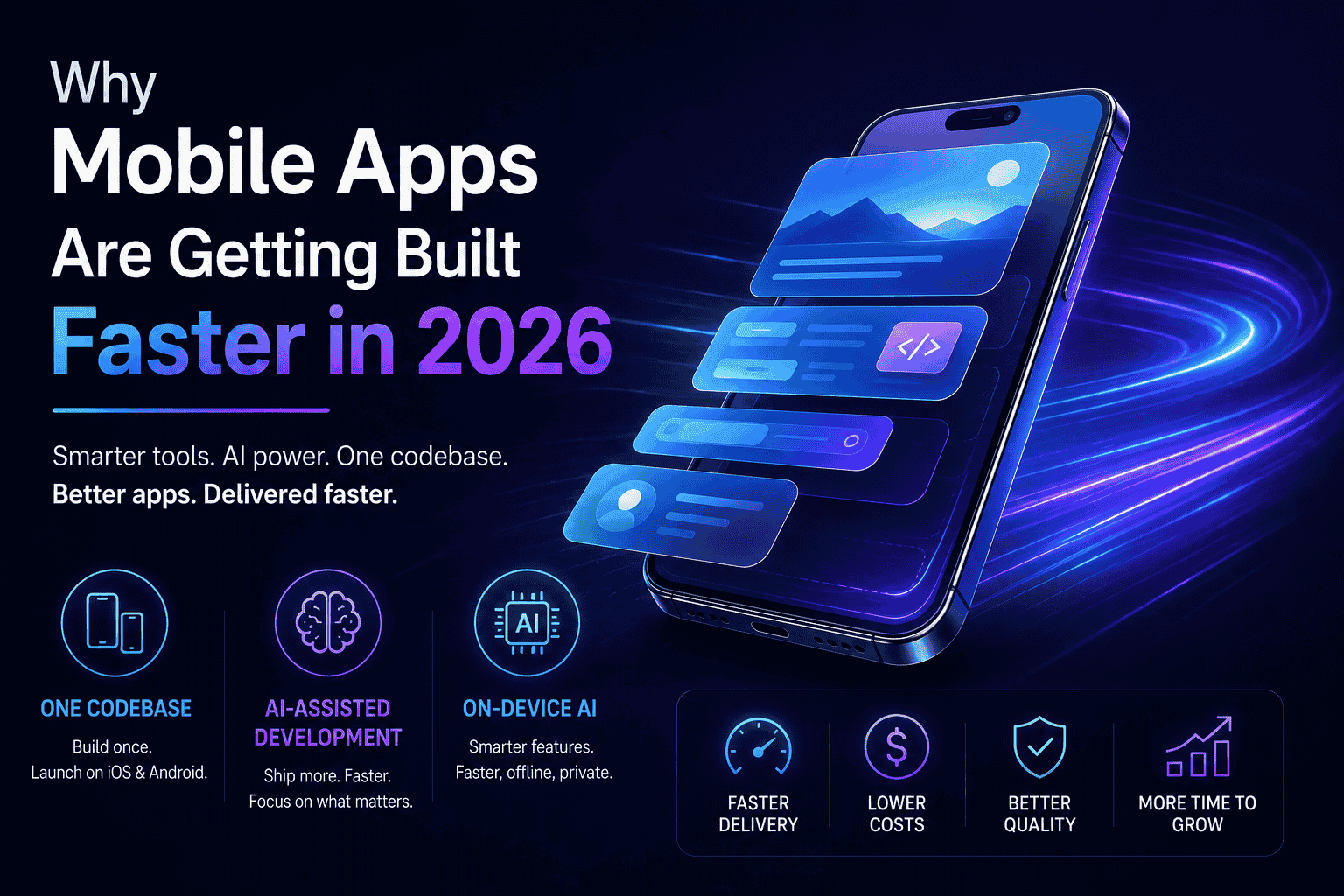
If your last mobile app took a year to ship, that's no longer normal — and it's not because developers got smarter overnight. Three practical shifts changed the math in 2026, and knowing them helps you tell a fast, honest delivery from a rushed one.
1. One codebase, two app stores, no compromise
For years, "build it fast" meant "build it once and hope it feels okay on both iPhone and Android." That trade-off has mostly disappeared. The frameworks behind cross-platform apps (React Native chief among them) went through a foundational rebuild that eliminated the performance tax that used to make shared-codebase apps feel sluggish. The practical result for you: one team, one codebase, two app stores, and an app that doesn't feel like a compromise on either platform. That alone typically cuts delivery time and cost by a third to a half compared to building separate native apps.
2. AI-assisted development is real now, not a demo
Developers are shipping boilerplate code, test scaffolding, and repetitive screens dramatically faster with AI-assisted tools — the tedious 40% of app-building that used to eat weeks now takes days. This doesn't mean apps build themselves; the judgment, architecture, and "will this actually work for our users" decisions still need an experienced engineer. But the grunt work shrinking means your budget goes further toward the parts that make your app actually good.
3. On-device AI features without the old excuses
Modern phones have dedicated AI chips built in. Features that used to require sending every user action to a slow, expensive cloud server — smart search, image recognition, personalization, voice input — can now run instantly, offline, and privately on the device itself. For a business, that means AI-powered features are no longer a "phase two, if budget allows" line item — they're affordable to include from day one, and they don't drain your users' battery or your cloud bill.
What "fast" should actually look like
Speed without discipline just moves the pain to later — a rushed app that crashes on real devices, gets rejected by the App Store, or can't handle a second feature request without a rewrite. A delivery partner moving fast the right way will show you:
Questions worth asking before you commit to a timeline
The bottom line
Mobile apps are genuinely faster and cheaper to build well in 2026 than they were three years ago — but only in the hands of a team that understands why the shortcuts got shorter, not just how to move quickly. The gap between a rushed app and a fast, solid one is almost entirely about which corners get cut, and a good partner will tell you exactly which ones before you sign off.
Planning a mobile app and want a realistic timeline — one that's fast because of the right foundation, not because something's being skipped? Reach out and I'll walk you through what a working version could look like in your first few weeks.
Senior Mobile Engineer building AI-native React Native products. Available for freelance contracts.